Article
AI is NOT a tool
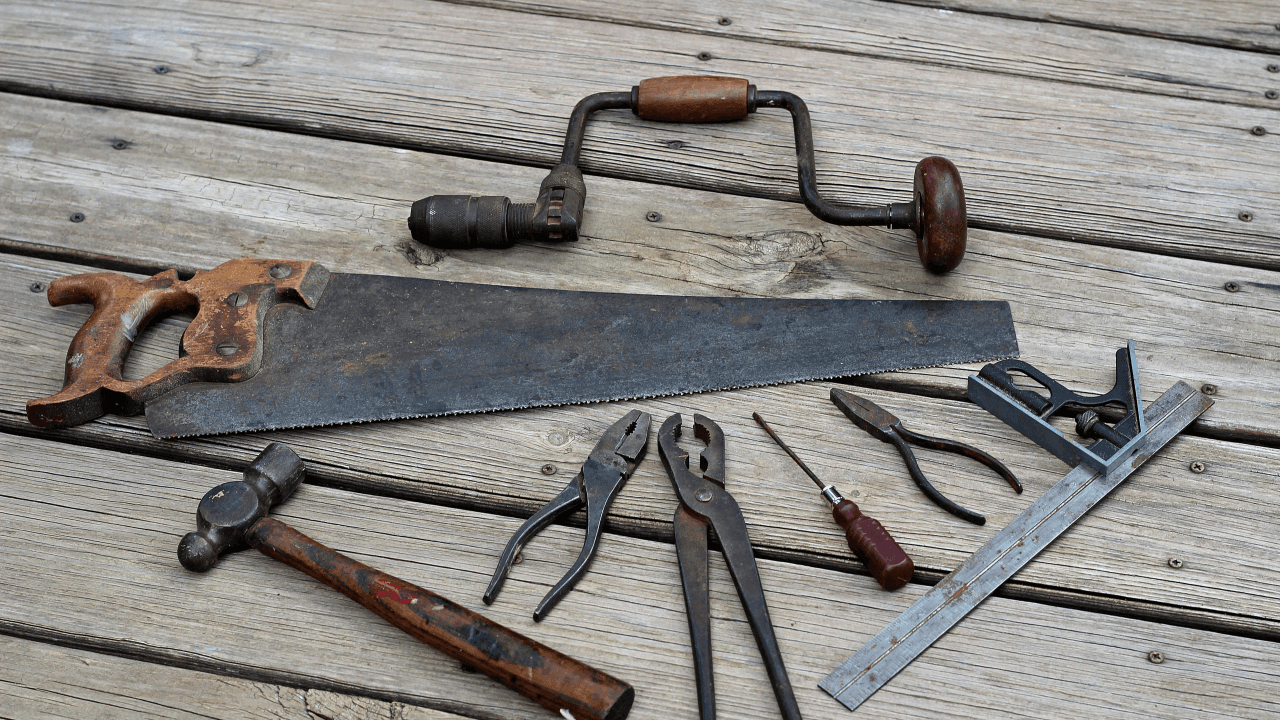

Image by Hunter Hayley at Unsplash - https://unsplash.com/@hnhmarketing
This is a good time to be understanding AI economics because the next few months are likely to be a watershed moment, what with SpaceX, Anthropic and OpenAI all heading for their IPO moments, and lots of speculation about whether they'll soar, or crash and burn under financial scrutiny. Today, we'll explore where the costs arise and why.
One thing AI doomers and boomers seem to agree on is this: AI is a tool.
To the Boomers, it's the tool to end all tools; to the Doomers, it's just a tool that's been hyped beyond reason.
Both are wrong. And, no, the answer is not somewhere in the middle; it's on a different axis entirely. If you want to understand AI costs, stop thinking of it as a tool. It is not a tool.
A tool is an object, device, or piece of software that facilitates the accomplishment of a goal. Think saw, chisel, scalpel, compiler, word processor, whisk, continuous integration pipeline, hammer, fork.
The contribution a tool makes towards achieving the goal varies depending on the skill and experience of the wielder. Brain surgeon with a scalpel. Michelangelo with a chisel. A great writer with a word processor. Wielding skills can be learned. Costs are typically flat rate and predictable.
In the mind of the wielder, there is a mental model where the goal and the particular utility of the tool converge. When I apply my skill with this tool, I will achieve X.
So far, so good. How does this apply to AI?
AI is not a Tool
When using a tool, the variance lives entirely within the user. The tool is, for want of a better word, dumb. In AI, the mental model never fully converges because the bulk of the variance lives in the model.
And the variance is not fixed or stationary. When I use a saw, with a certain pressure at a certain angle, I know what will happen. The same prompt will not always return the same response. And the almost-became-a-job of prompt engineering has been largely absorbed by improvements in newer models, so there's less direct control over variance.
Short of misuse, the worst a tool can do is contribute nothing to a goal. AI runs from strongly positive to strongly negative. I can poorly cut the wood, but the passive saw cannot.
AI is a collaborator with unpredictable reliability in ways an instrument could never be.
This means the results may range from amazing, with minimal input, to something that consumes your effort (what is fashionably now called a Denial of Attention attack), leaving you worse off than if you had not used it in the first place.
But it is Amazing
None of this should be read as a negative. A well-directed crafting collaborator can produce outputs that neither party could produce alone. To see what can be achieved, check out this post from the team at Fin (though note they measured outputs in R&D, not business outcomes).
The point is that AI lacks the guarantees a tool has because it is totally contingent on external active oversight. No one talked about this when the cost was fixed at a couple of hundred dollars a month because that was tool pricing. You can buy a saw for £5 or a scalpel for £10. The cost per cut is so small it's inconsequential. Once you have to know about tokens, there is no way to predict or estimate cost per goal.
Costs arise from the model itself (infrastructure, training, tuning, inference, investors who want a return) and the external active oversight (people, prompting, testing, rework, agents) that must be applied. All of that is ultimately experienced as token cost.
Consequences
If the contribution range of an LLM runs from -100 to +100, then the outcome depends on who wields it and on whether the surrounding system can mitigate the downside.
Teams, like Fin, that demonstrate unequivocal AI success were already excellent. They had the strength and depth in quality assurance, prioritisation, testing, review, and judgement. They had active oversight. So when LLMs came along, after the expected learning curve, they were able to keep the crafting collaborator within the positive range.
Tools have uniform gains; crafting collaborators come with exactly the bimodal reality we are currently witnessing, where elite teams thrive, and mainstream teams stall.
Economics
Tools have fixed, knowable cost and a bounded, predictable return, so their business case is simple. An automated deployment pipeline might come with a significant set-up cost, but the benefit can be measured in uptime, availability, resilience, customer satisfaction, revenue, loyalty, and the cost per invocation is pennies.
A crafting collaborator, with a variable contribution range that includes the negative, has neither a knowable cost nor a predictable return. And even in elite-team success stories, the conversion to revenue, retention, or margin remains largely unevidenced.
Zillow, the real estate marketplace, might end up spending $10m on AI in 2026, which is nearly 50% of its 2025 net income. That's going to be either really good or existentially bad.
Questions
If a company could utilise LLMs to directly generate revenue, even with a poor margin, then the question of cost would not exist. Even if the costs were high, as long as it netted out positively, then it's a benefit.
But that is the world of tools. According to Goldman Sachs, LLM costs have risen to around 10% of the wage bill and could match it in the next few quarters. So the more interesting question is, if you could produce 10x more code but you would need more engineers and more operational staff to ensure the quality, and add your wage bill again on top for the LLM, would you still want to use LLMs?
If the net benefit is still positive, then yes. Or, and here's the heretical question, in a sea of massive, scary cost numbers and potentially market-crashing IPOs, might we finally be about to find where AI sits in our ecosystem? Not as a tool, but as a crafting collaborator we can afford, where the cost is less than the benefit.
If you want to find out how we treat clients' AI investments as carefully as if it were our own money, then drop us a line.